Introducing PBSERUM — Professional bioremodeling enzymes, now available

Hyaluronidase
Targets: Hyaluronic acid
About Hyaluronidase
Hyaluronidase is an enzyme that breaks down hyaluronic acid — the molecule that holds water in the skin. Hyaluronic acid is essential for hydration, but when there is too much of it (either naturally accumulated with age or left over from previous filler injections), it can cause puffiness, unevenness, and texture irregularities. Hyaluronidase corrects this by controlled breakdown of excess HA, restoring balanced tissue hydration.

Hyaluronic acid — the water-holding molecule hyaluronidase targets
Target
Hyaluronic acid
Mechanism
Breaks down excess or previously injected hyaluronic acid, a specific GAG that holds 1000x its weight in water.
Effect
Reduces HA-related unevenness, corrects texture irregularities, promotes balanced tissue hydration.
Clinical Indications
How Hyaluronidase targets specific concerns, across face and body treatments.

Post-Filler Refinement
Previously injected hyaluronic acid filler can migrate, form subtle lumps, or produce a bluish Tyndall effect in thin-skin areas like the tear trough. Topical hyaluronidase refines these surface irregularities without fully dissolving the deeper filler deposit — rebalancing free, unbound HA in the papillary dermis rather than aggressively reversing the original treatment.
Bioremodeling Cascade
Hyaluronidase acts primarily in the Reset phase — enzymes clear damaged, fragmented tissue — collagen debris, excess ha, fat deposits, matrix congestion.
Enzymes clear damaged, fragmented tissue — collagen debris, excess HA, fat deposits, matrix congestion.
The cleared environment responds optimally to active ingredients — growth factors, peptides, vitamins, antioxidants reach fibroblasts directly.
Home care supports regeneration with keratinase-enhanced penetration.
Enzyme synergies

Products containing Hyaluronidase
Available across 3 product lines, priced in USD.
pbserum Plus
· 1 product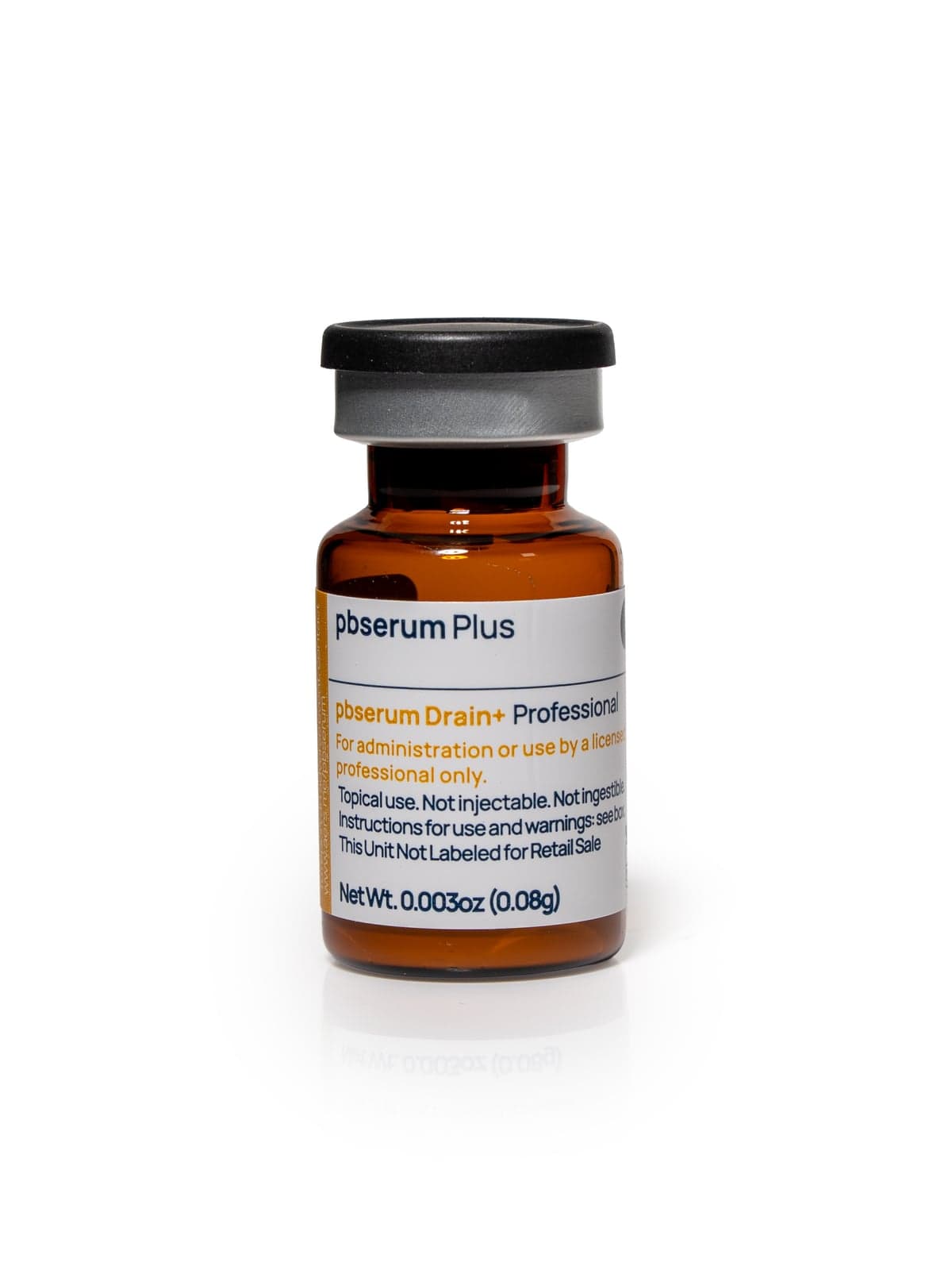
pbserum HYAL Balance
· 2 products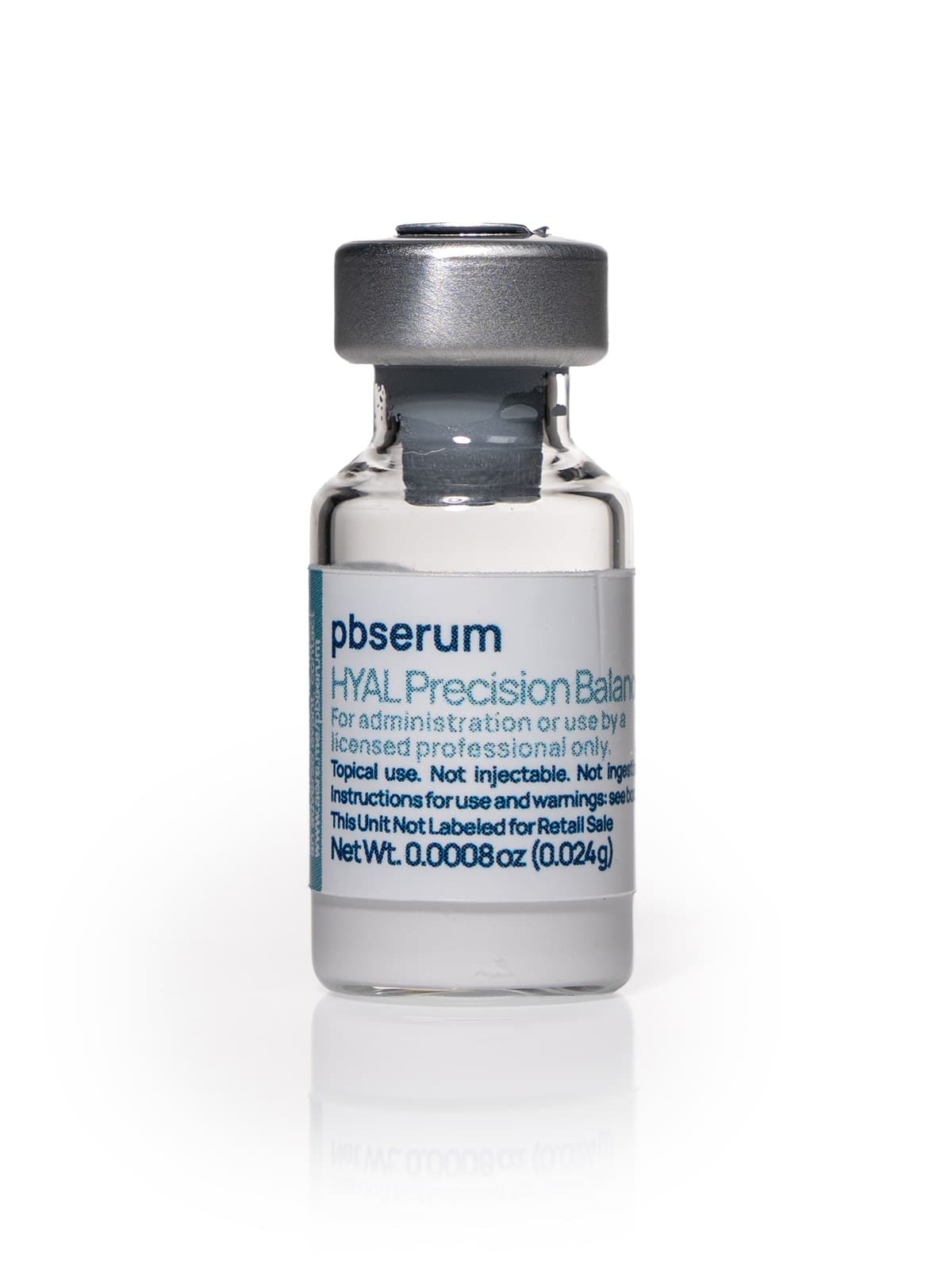
pbserum HYAL Precision Balance
Low-dose topical hyaluronidase for mild skin unevenness. Suitable for sensitive skin and preventive maintenance between deeper protocols.
Contents: 3 powder vials
From
US$135.00 (excl. tax)
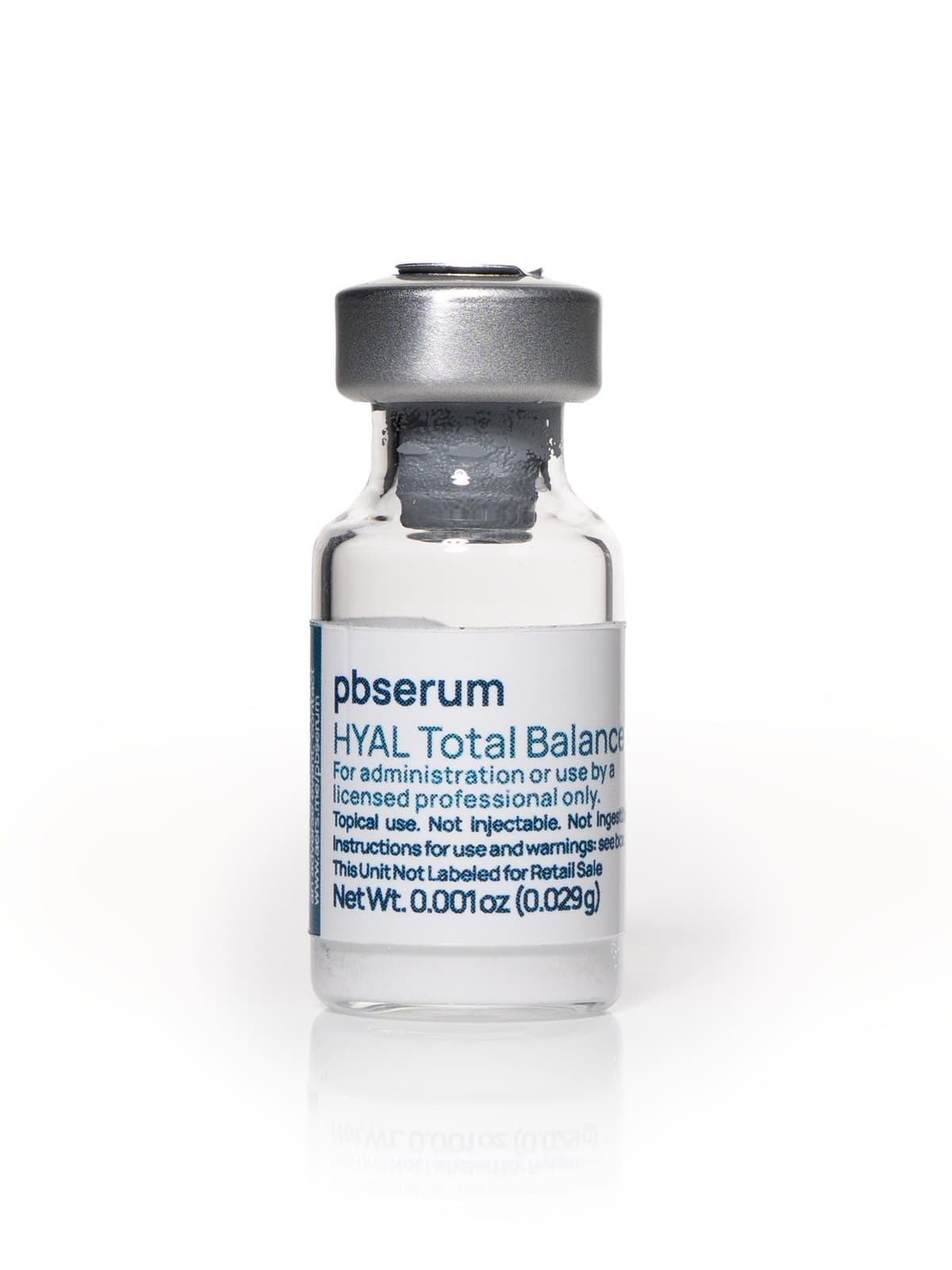
pbserum HYAL Total Balance
High-concentration topical hyaluronidase for visible texture issues. Designed for intensive protocols that need to unify uneven skin quickly.
Contents: 3 powder vials
From
US$135.00 (excl. tax)
pbserum Veluria
· 1 product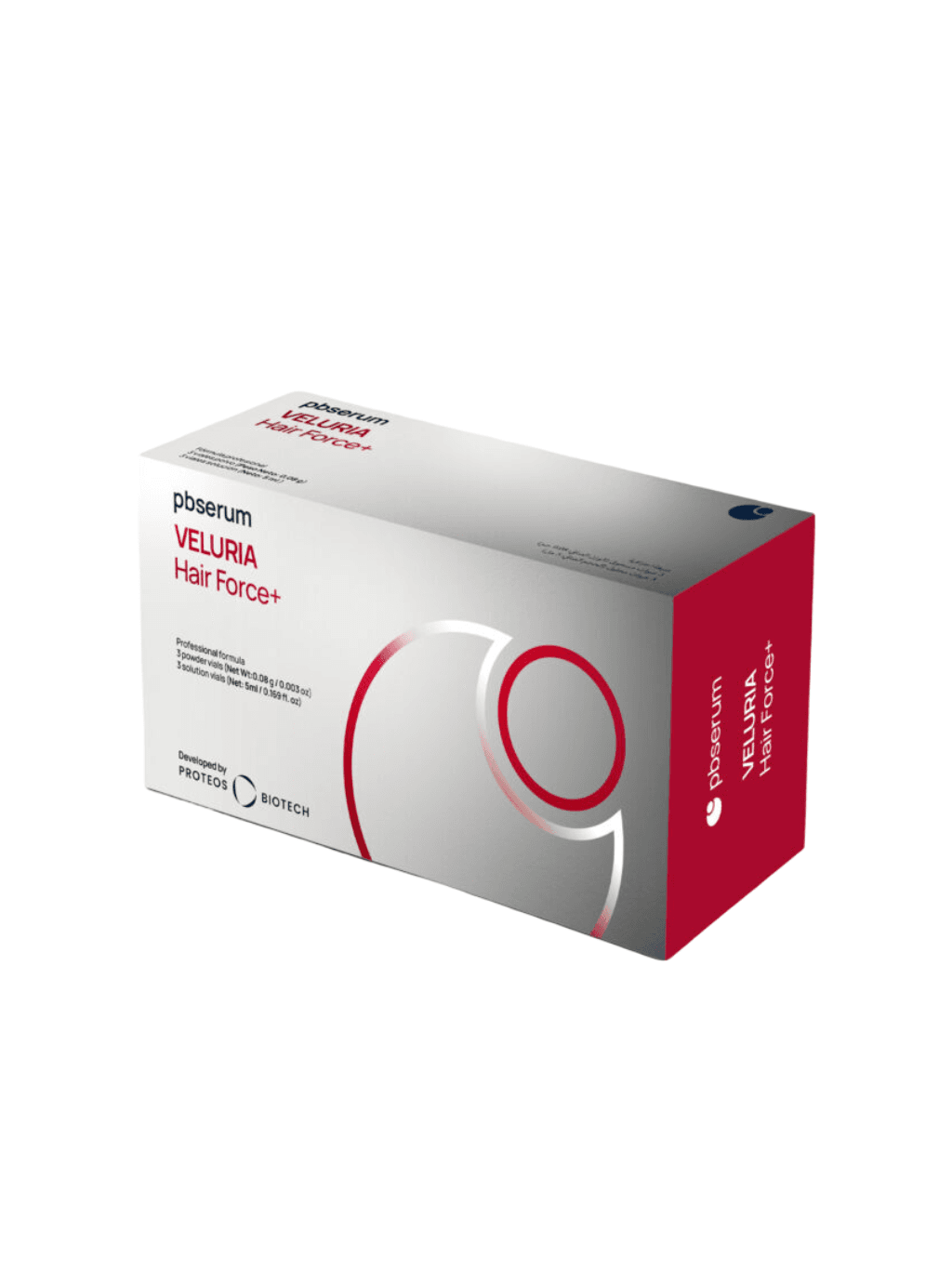

Deeper look at Hyaluronidase
Mechanism, clinical benefits, and technical specifications
The underlying biochemistry
Hyaluronidase is an enzyme that cuts hyaluronic acid (HA) — the molecule that holds water in the skin — into smaller fragments. HA is remarkable: it can hold up to 1,000 times its own weight in water, which is why it's central to skin hydration, plumpness, and cushioning. PBSERUM PB3000 is a lab-produced recombinant hyaluronidase with pharmaceutical-grade purity, defined activity, and much lower allergy risk than older hyaluronidase products (which were extracted from animal testicles and often carried contaminants).
Mechanism in detail
Not all hyaluronidases are the same. There are three major families of enzymes that break down hyaluronic acid: mammalian hyaluronidases (found in humans and other animals), bacterial lyases (which use a different chemistry), and enzymes from leeches and crustaceans 1. PB3000 belongs to the first family — it uses classical hydrolysis (the same chemistry as most digestive enzymes) to cut hyaluronic acid at very specific spots. It mainly acts on hyaluronic acid, with just a small amount of activity on related sulfated sugars — a very different substrate target than lyase PB72K.
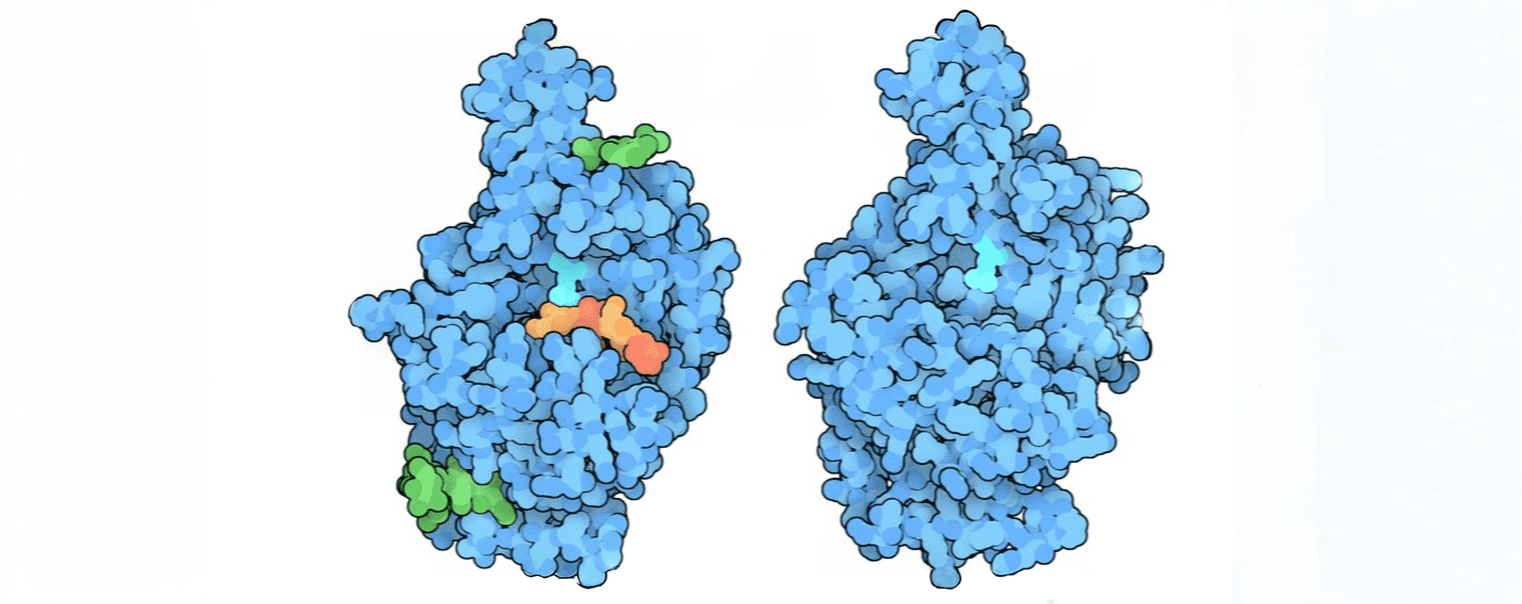
Why recombinant matters. Historically, hyaluronidase used in medicine was extracted from bull or sheep testicles. These preparations work, but they're variable in purity, inconsistent from batch to batch, and carry allergy risks from leftover animal proteins. Recombinant hyaluronidases (like PB3000 and human-sequence rHuPH20) are produced in controlled microbial hosts 2 — resulting in defined, consistent activity and much lower risk of allergic reactions. For topical cosmetic use involving repeated application, this purity is critical for long-term tolerability.

Acts on both natural and injected hyaluronic acid — but with a preference. Hyaluronidase doesn't distinguish between the HA your body naturally makes and HA that was previously injected as a dermal filler — it works on both. In a topical protocol (often facilitated by microneedling to help the enzyme reach the dermis), PB3000 primarily rebalances excess or poorly distributed natural HA in the upper skin layers, rather than completely dissolving deep filler deposits. Cross-linked filler HA (the modified version used in most injectable fillers) is more resistant to the enzyme because the chemical crosslinking hides the cutting sites — so topical application preferentially addresses free, unbound hyaluronic acid rather than aggressively dissolving filler.

Temporary and reversible — by design. Hyaluronidase's action isn't permanent. Studies using recombinant human hyaluronidase show that when it depolymerizes hyaluronic acid in tissue, the HA recovers naturally within about 24 hours 2 — meaning the effect is transient and self-limiting. A separate 8-week clinical trial on topical formulations that modulate both HA synthesis and breakdown showed statistically significant improvements in fine lines, texture, brightness, and hydration 5 — confirming that working with HA balance topically is a meaningful, measurable clinical endpoint.
Clinical benefits
- Corrects HA-related surface irregularities and puffy, "waterlogged" texture
- Rebalances uneven HA distribution after previous filler treatments (residual lumps, Tyndall effect zones)
- Reduces localized edema and tissue congestion in areas of HA accumulation
- Improves skin surface smoothness and tactile uniformity in mild irregularities
- Enhances penetration and efficacy of concurrently applied actives by depolymerizing the viscoelastic matrix barrier
- Supports post-filler refinement protocols (topical touch-up rather than injection reversal)
- Restores a physiological HA gradient — endogenous remodeling re-establishes balanced hydration
- Low-concentration topical delivery minimizes systemic exposure and immunogenic risk vs bovine/ovine injectable preparations
Technical profile
- Product code
- PB3000
- Enzyme class
- Hyaluronidase (EC 3.2.1.35) — endo-β-N-acetyl-hexosaminidase
- Mechanism
- Hydrolysis of β-1,4 glycosidic bond (NOT β-elimination like bacterial lyases)
- Source
- Recombinant (bioengineered), non-animal origin
- Primary substrate
- Hyaluronic acid (β-1,4 linkage between GlcNAc and GlcUA)
- Secondary substrates
- Limited activity on chondroitin and chondroitin-4/6-sulfate
- Cleavage products
- HA oligosaccharides; predominantly tetrasaccharides
- pH range
- ~4.5–7.0 (peak activity near physiological pH for recombinant isoforms)
- Temperature optimum
- ~37 °C
- Activity units
- TRU (Turbidity Reducing Units) or USP units
- Stability
- Lyophilized at 2–8 °C; reconstituted enzyme used within session
- Formulations
- Precision Balance (low conc., sensitive areas); Total Balance (high conc., intensive)
- Target compartment
- Upper dermis / papillary matrix (topical, facilitated penetration)
- Selectivity
- Acts on endogenous and injected HA; cross-linked filler HA is more resistant
Scientific references
Peer-reviewed research underpinning the mechanism and clinical evidence above.
- 1Stern R, Jedrzejas MJ. Hyaluronidases: their genomics, structures, and mechanisms of action. Chemical Reviews, 2006.
Comprehensive review of the three hyaluronidase families — mammalian endo-β-N-acetyl-hexosaminidases (PH20, HYAL1-4), bacterial hyaluronate lyases (β-elimination), and leech/crustacean glucuronidases. Foundational text on substrate specificity and mechanism.
- 2Bookbinder LH, Hofer A, Haller MF, et al.. A recombinant human enzyme for enhanced interstitial transport of therapeutics. J Control Release, 2006.
Characterized rHuPH20 (recombinant human PH20 hyaluronidase). Depolymerization of interstitial HA increases dispersion of co-administered therapeutics without tissue distortion. Interstitial HA recovers within ~24 hours — establishes reversibility.
- 3Papakonstantinou E, Roth M, Karakiulakis G. Hyaluronic acid: A key molecule in skin aging. Dermato-Endocrinology, 2012.
Defines HA as the principal molecule for skin water retention and turgor. Describes coordinated roles of HA synthases (HAS1-3), hyaluronidases (HYAL1-4), and receptors (CD44, RHAMM) in skin moisture homeostasis.
- 4Cavallini M, Gazzola R, Metalla M, Vaienti L. The role of hyaluronidase in the treatment of complications from hyaluronic acid dermal fillers. Aesthetic Surgery Journal, 2013.
Review covering literature from 1928 to 2011. Compares bovine testicular, ovine, and recombinant human preparations for potency, immunogenicity, and applications. Establishes hyaluronidase as essential for resolving filler-related complications.
- 5McDaniel DH, Dover JS, Wortzman M, Nelson DB. In vitro and in vivo evaluation of a moisture treatment cream containing three critical elements of natural skin moisturization. J Cosmet Dermatol, 2020.
Topical formulations modulating HAS upregulation and HYAL downregulation produced measurable increases in tissue HA content, hydration, and barrier markers. 8-week clinical arm showed statistically significant improvements in fine lines, texture, brightness, and hydration.
Citations link to PubMed or DOI. Click any reference title or identifier to open the source.